The self judgment
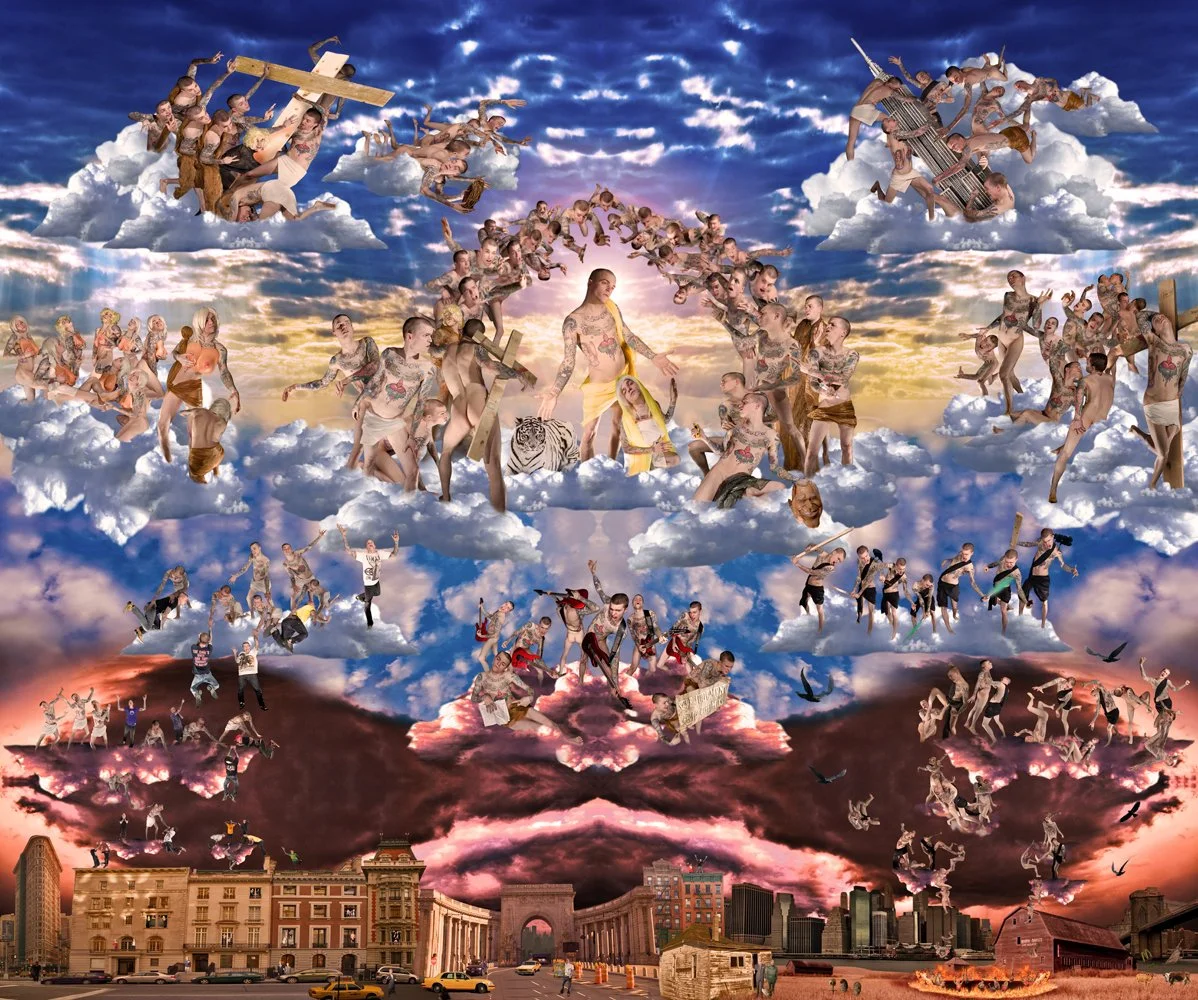
The Self Judgment reimagines the structures of Michelangelo’s Last Judgment through photography and self-portraiture. Composed entirely from photographs of myself, the work uses a single figure to inhabit hundreds of roles, transforming the image into a collective portrait rather than an individual one.
While inspired by a religious narrative, the work is less concerned with faith than with the enduring human tendency toward judgement. Across cultures, ideologies, and generations, societies continually divide the world into categories of right and wrong, virtue and failure, salvation and condemnation. The visual language of The Last Judgment provides a framework through which these recurring patterns can be examined.
By occupying every role within the composition, distinction between judge and judged, victim and aggressor, redeemed and condemned begin to collapse. The figures become reflections of shared human behaviors rather than separate individuals, revealing how easily people participate in the same systems they seek to resist or escape.
The work approaches judgment not as a final event, but as an ongoing condition. It reflects a world perpetually engaged in cycles of conflict, belief, punishment, and redemption, often destroying itself in pursuit of the very ideals it claims will save it.